If you have spent your hard-earned money on a premium mattress and a high box spring foundation, you are likely enjoying a fantastic night’s sleep. However, there is a common pitfall that ruins the aesthetic and functionality of these "hotel-style" setups: the bedside table that sits too low. In my 20 years of consulting in UK homes, I have seen far too many people reaching down toward the floor to find their phone or glasses in the middle of the night.
When dealing with a high box spring nightstand challenge, precision is not a luxury—it is a requirement. If you are tired of guessing, let’s get into the specifics of why your bedside table height matters for your spine, your comfort, and your bedroom’s flow.
Step One: The Mandatory Tape Measure Check
Before you look at a single piece of furniture, you need raw data. Do not rely on "eye-balling" the space. Grab a tape measure and follow this exact process:
Clear your bedside area. Measure floor to mattress top at the head of the bed. Do this at the very edge where your nightstand will sit. Record this number in centimetres. Do not round up or down.Most modern high-profile beds, especially when paired with a pillow-top mattress, sit between 65-75 cm from the floor. This is a significant jump from standard platform beds, which often sit at 45-50 cm. If you buy a standard 50 cm table, you are going to be reaching downward at a 45-degree angle—a recipe for shoulder strain.
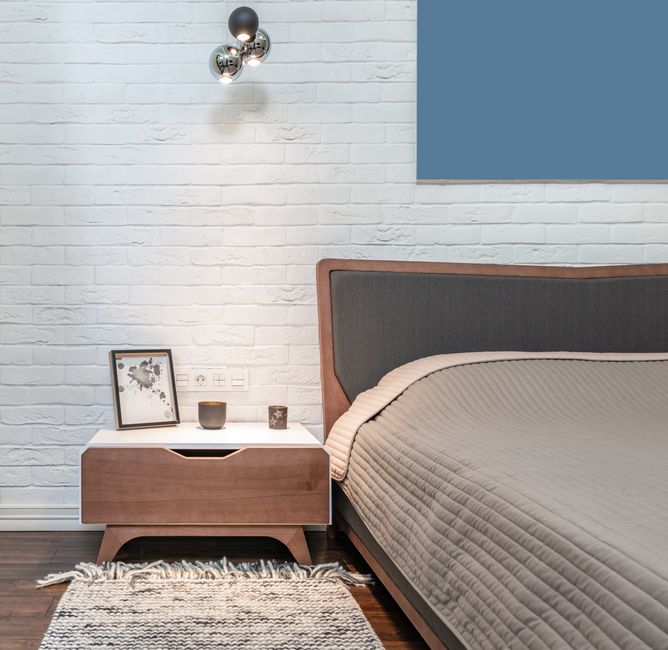
The Golden Rule: The 5-10 cm Drop
In the world of interior ergonomics, there is a consensus among comfort experts. Much like the ergonomic standards often discussed by the National Institute of Standards and Technology (NIST) regarding human reach and comfort, your bedside table should be positioned to reduce effort.
The Golden Rule: Aim for your nightstand surface to be 5 to 10 cm below the top of your mattress.
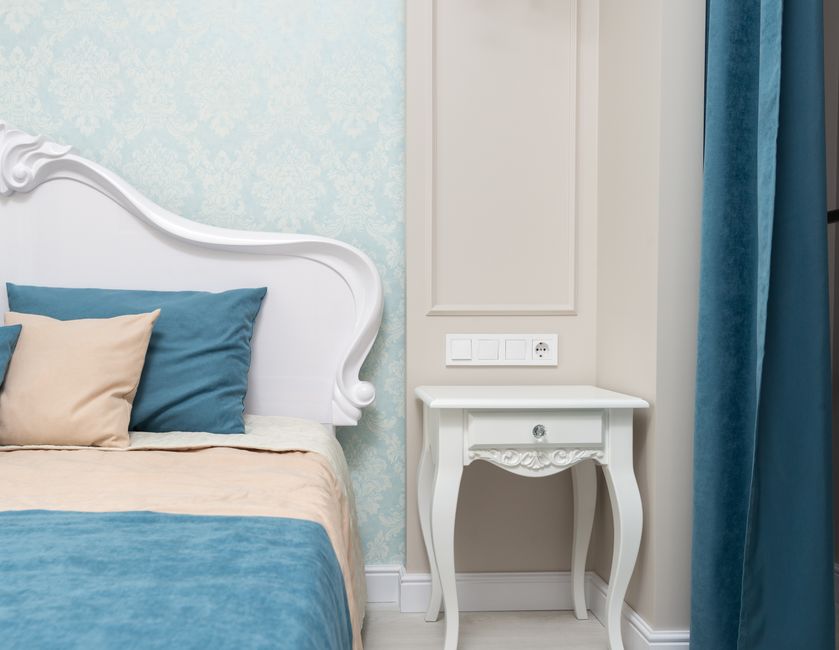
Why this specific range? If your table is exactly level with your mattress, you risk knocking over your water glass or catching your phone cord in your bedding. If it is more than 10 cm lower, you have to break your postural alignment to reach your bedside essentials. For a bed with a mattress top at 75 cm, you are looking for a table that stands between 65 cm and 70 cm.
Bed Type Differences: Why One Size Does Not Fit All
The height of your bed is a cocktail of base plus mattress. Let’s break down how different styles change your requirements:
Bed Type Typical Height Range Ideal Nightstand Height Low Platform 40–50 cm 40–45 cm Standard Divan 55–60 cm 50–55 cm High Box Spring + Pillow-Top 65–75 cm 63–70 cmThe Pillow-Top Complication
Many clients forget that a 30 cm deep pillow-top mattress compresses differently than a firm pocket-sprung unit. When you sit on the edge of the bed, the mattress sinks. When you are lying down, you are supported. I always advise my clients to measure the height of the mattress while it is uncompressed, but consider your arm reach while lying on your pillow. If your shoulder is pinned against a thick pillow, your reach for the nightstand becomes shorter. This is why 63-70 cm bedside table heights are the "sweet spot" for high-profile beds.
Ergonomics and Shoulder Reach
I frequently reference resources like amumreviews.co.uk when discussing the balance between aesthetic bedroom decor and practical, real-world function. A nightstand is a utility piece first. If you are waking up with a sore shoulder, check your bedside setup. If you have to lift your elbow higher than your shoulder to reach your lamp, the table is too high. If you have to lean your torso out of bed to reach your glasses, the table is too low.
Proper reach should be a natural "sweep" of the arm without your back leaving the mattress. By keeping the table within that 5-10 cm drop zone, you maintain neutral spinal alignment even when grabbing your phone for a quick alarm check.
Sourcing Furniture: Dealing with the "Low-Table" Trend
If you browse high-end retailers like Petalwood Interiors, you will notice a trend toward lower-profile, mid-century modern bedside tables. Many of these top out at 50-55 cm. If you have a high box spring bed, these tables will look like doll furniture next to your mattress.
What do you do if you love a design that is too short? You have two practical options:
- The Risers: If the table has wooden legs, you can install furniture risers, though this can compromise the aesthetic. Wall-Mounted Shelves: This is my preferred rental-friendly solution. By mounting a floating shelf or drawer unit to the wall, you can set the height to exactly 68 cm, regardless of the furniture's original design. Just ensure you use the correct wall anchors for your specific wall type (brick vs. plasterboard).
Mental Note: The Mattress Overhang
Before you finalize your purchase, check your mattress overhang. Many high-profile box springs have a mattress that sits perfectly flush, but some have a "cushion top" that overlaps the base by 1-2 cm. If you place a bulky nightstand too close, the edge of your mattress will catch on the table’s edge. Always leave a 2-3 cm gap between the edge of the mattress and the edge of the nightstand to ensure your bedding can tuck in properly without bunching.
Final Checklist for Your Purchase
Before you hit "buy" on those nightstands, run through this quick checklist one last time:
Tape Measure Check: Did you confirm your mattress top height? Reach Test: If you are sitting up in bed, does the top of the table fall within that 5-10 cm range? The Surface Area: Will your lamp, phone, and glass of water fit? If the table is high, ensure the base is stable—a tall, spindly table is a tipping hazard. Drawer Accessibility: Can you open the drawers while lying in bed, or will your hand hit the mattress? If the table is too tall, the drawer handle might be at a difficult angle.Finding the right high box spring nightstand is about balancing the physical dimensions of your room with https://amumreviews.co.uk/should-bedside-tables-be-higher-than-the-bed/ the biomechanics of your body. Don't be swayed by "about right" advice. Get your measurements, find that 63-70 cm target height, and prioritize your comfort. Your neck, your shoulders, and your morning routine will thank you for the extra effort.